


Afternoon Tea Pricing and Menu: What to Expect
Last Updated: October 23, 2026
Quick Summary
Afternoon tea pricing menu combines tea quality, food volume, service length, and add-ons into a per-person quote. Two venues can charge the same price and deliver very different value, so break every quote into four buckets: base service, tea program, food volume, and extras to compare accurately.
Most tea rooms structure menus in two to four tiers, with differences based on food volume and premium inclusions rather than tea alone.
The quoted per-person price rarely equals your final bill; factor in tax, gratuity, add-ons like champagne, and deposit terms.
A standard afternoon tea service lasts 90 minutes to two hours, with roughly 20-30 minutes per course.
Ask for an itemized quote before booking that separates base service, tax, gratuity, and add-ons to avoid surprises.
Dietary accommodations like vegan or gluten-free menus may carry a small upcharge and should be confirmed in writing at booking.
Table of Contents
Understanding Afternoon Tea Pricing and Menu Structure
The four cost buckets behind every afternoon tea quote
How service tiers usually differ
The total-cost framework
Menu structure: what the price actually buys
Dietary accommodations and their pricing impact
A quick comparison checklist
What's Included in a Full Afternoon Tea Service
Exploring the Afternoon Tea Menu: Tea Selections and Food Pairings
Private Tea Room for Anniversary Celebrations and Special Occasions
Afternoon Tea Reservation Tips and Booking Essentials
Reservation lead time
Walk-ins and same-day availability
Service duration and arrival timing
Cancellation and deposit policies
Group thresholds and service charges
Accessibility, parking, and arrival logistics
Payment, deposits, and splitting the bill
A booking checklist to bring to the call
Afternoon Tea Service Duration: How Long Should You Plan to Stay
Planning Your Tea Experience: Total Cost and Value Considerations
Frequently Asked Questions
Understanding Afternoon Tea Pricing and Menu Structure
An afternoon tea pricing menu bundles tea quality, food volume, service length, and add-ons. Two venues can quote the same per-person figure and deliver very different value. Break every quote into four buckets, base service, tea program, food volume, and extras, and the real difference becomes obvious.

The four cost buckets behind every afternoon tea quote
Bucket | What it covers | What to ask |
Base service | Seating, table service, standard tea, the core three-course food presentation | Is the quoted price per person or per pot? Does it include refills? |
Tea program | Loose-leaf vs. bagged, number of selections, premium blend surcharges, caffeine-free options | Are premium or reserve teas included or added at a per-cup charge? |
Food volume | Number of sandwiches, pastries, and scones per guest; whether seconds are available | Is the tiered stand portioned per person or shared? Can courses be replenished? |
Extras | Champagne, sparkling cider, floral arrangements, personalized menus, private room fees, gratuity, tax | Which extras are bundled and which are line items added at checkout? |
How service tiers usually differ
Most tea rooms structure menus in two to four tiers, and the differences are rarely about tea alone, they are about food volume and premium inclusions:
Classic tier: standard tea selection, one sandwich round, a small pastry assortment, one scone per guest. Best for a light midday meal.
Full or signature tier: broader tea list, additional savory bites, a larger pastry selection, scone service with clotted cream and preserves, and often a take-home treat.
Celebration tier: everything in the full tier plus a sparkling toast, a dedicated dessert course, and sometimes a keepsake or personalized menu.
Compare tiers side by side rather than a classic tier at one venue to a celebration tier at another. Tier names are marketing; inclusions are what you pay for.
The total-cost framework
The quoted per-person price is rarely the final number. Compare total out-of-pocket cost:
Base price × guests. Confirm whether the price is per person or per pot shared between two guests.
Tax. In most states, prepared food and beverage is taxable; confirm the rate that applies to your bill.
Gratuity. Many tea rooms add a service charge for parties of six or more; ask whether it is discretionary or automatic.
Add-ons. Champagne, premium tea flights, extra scones, and private room fees are commonly separate line items.
Deposit and cancellation terms. A deposit is not an extra cost if it is applied to the final bill, but it changes your cash-flow and risk if plans change.
Pro Tip Ask for an itemized quote before you book. A venue that can break out base service, tax, gratuity, and add-ons in writing is easier to compare, and less likely to surprise you at the table.
Menu structure: what the price actually buys
A well-built afternoon tea menu follows a fixed arc: tea selection, savory course, scone course, sweet course. The price reflects how generous each course is and how much choice you get.
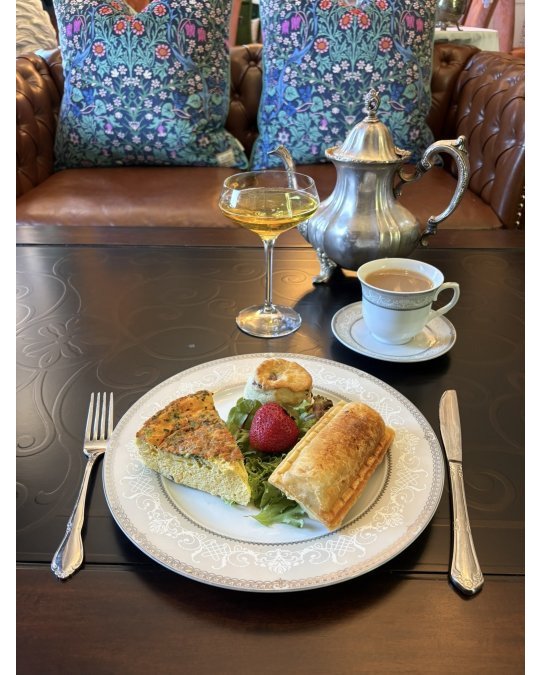
Savory course: finger sandwiches (cucumber, smoked salmon, egg salad, roasted chicken) plus one or two savory pastries or quiches. Higher tiers add a third or fourth savory item.
Scone course: warm scones with clotted cream and preserves. Some venues offer a single scone per guest; others provide seconds or a rotating flavor.
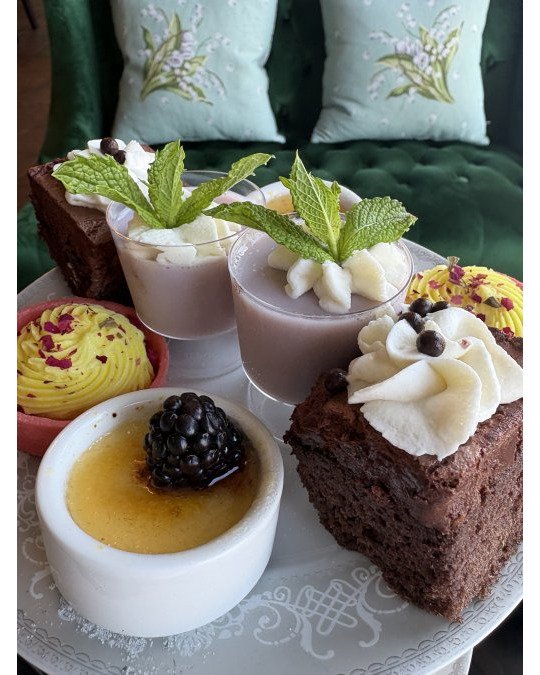
Sweet course: petit fours, macarons, tarts, truffles, and seasonal pastries. The celebration tier typically adds a plated dessert.
Dietary accommodations and their pricing impact
Dietary needs are where quotes diverge most. Vegetarian substitutions are usually free; vegan and gluten-free menus may carry a small upcharge for separate preparation. Confirm allergy accommodations at booking, not at the table. Caffeine-free teas are typically included, though reserve decaf blends may be a line item.
Watch Out If a venue cannot tell you in advance whether it can accommodate a gluten-free or vegan guest, treat that as a signal about kitchen flexibility. For milestone celebrations, confirm dietary accommodations in writing when you book.
A quick comparison checklist
Before you commit, confirm six items per venue: per-person price and inclusions; whether tax and gratuity are added; tea program details (loose-leaf, refills, surcharges); food volume and seconds; dietary accommodations and upcharges; and deposit, cancellation window, and party-size service charges.
At Sotherton Tea Room, our service tiers are built around these same buckets so you can see exactly what each level includes before you reserve.
What's Included in a Full Afternoon Tea Service
A full afternoon tea service is structured: tea selection first, then a tiered presentation of savory items, sweet treats, and finally scones with accompaniments.
The sweet course showcases petit fours, macarons, fruit tarts, chocolate truffles, and seasonal pastries, smaller than standard desserts so guests can sample multiple flavors.
Scones arrive with clotted cream and preserves, typically strawberry or raspberry jam. Their quality, warm, buttery, properly risen, often signals the venue's overall caliber.
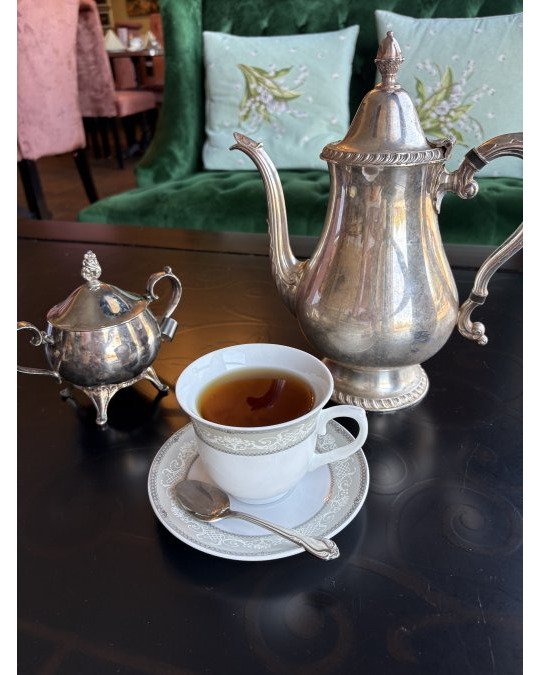
Tea service varies: some venues offer unlimited refills from a curated selection, others a set number of cups from premium blends.
Key Takeaway The hallmark of a well-executed afternoon tea service is pacing. Each course should arrive with enough time to savor it before the next begins. Rushed services diminish the experience, regardless of food quality.
Exploring the Afternoon Tea Menu: Tea Selections and Food Pairings
The afternoon tea pricing menu showcases tea variety and thoughtful food pairing.
Herbal and specialty teas appeal to those avoiding caffeine: chamomile, peppermint, and rooibos are common.
Seasonal menus reflect ingredient availability: spring might bring asparagus sandwiches and lemon-forward pastries, autumn spiced elements and darker fruit preserves.
Food pairings matter as much as tea selection.
Watch Out If a venue offers the same generic tea list regardless of season or offers no information about tea origins and flavor profiles, that's a signal the tea selection may not be a priority. Premium afternoon tea experiences treat tea as seriously as the food.
Private Tea Room for Anniversary Celebrations and Special Occasions
A private tea room transforms afternoon tea into a personalized celebration for anniversaries, milestone birthdays, and intimate gatherings.
Private rooms let you control atmosphere, timing, and guest list without public dining noise, linger longer, toast with champagne, or add custom menus and decorations.
When selecting a private tea room, consider capacity, natural lighting, and ambiance; garden views or architectural details refine the setting.
Bespoke menus are a hallmark of quality private tea venues.
Ask about add-ons: champagne service, floral arrangements, photography permissions, or special desserts. Some venues include these; others charge separately.
Afternoon Tea Reservation Tips and Booking Essentials
Booking afternoon tea is a logistics decision as much as a menu one. These are the details that most often cause friction, and that most listings leave out.
Reservation lead time
Most tea rooms accept reservations two to six weeks ahead, and weekend slots fill first. Book two to three weeks ahead for standard weekend service, one week for weekdays, four to six weeks for a private room or group of six or more, and as early as possible for holiday weekends. If your date is flexible, ask which seatings have the most availability, mid-morning and early afternoon are typically quieter.
Walk-ins and same-day availability
Walk-in policies vary: some tea rooms hold a few tables for same-day guests, others are reservation-only because food is prepared in fixed quantities. Call ahead the same morning rather than arriving unannounced, and assume groups need a reservation.
Service duration and arrival timing
A standard afternoon tea runs 90 minutes to two hours. Arrive 10 to 15 minutes early to be seated, review the tea list, and place dietary requests. If you have a hard stop, tell the venue when you book so pacing can be adjusted.
Cancellation and deposit policies
Cancellation terms are the most common source of surprise charges. Standard reservations typically allow free cancellation 24 to 48 hours before the seating; private rooms and large parties usually require a deposit with a 72-hour-or-longer window; peak dates may be stricter. Ask whether a deposit is required, what the cancellation window is, and whether it is refundable or applied to the final bill, in writing for private events.
Group thresholds and service charges
Parties of six or more frequently trigger an automatic service charge, and some venues require a set menu for larger groups. Confirm the threshold, the percentage, and whether the group can order from the standard menu or must choose a preset tier.
Accessibility, parking, and arrival logistics
These details are rarely listed online but matter for guests with mobility needs or out-of-town visitors. Confirm step-free entry, an accessible restroom, and whether the private room is on the entrance level. Ask about on-site, validated, or street parking and how early to arrive. For guests arriving separately, get the nearest drop-off point and waiting area.
Payment, deposits, and splitting the bill
Payment terms vary: some venues collect full payment at booking, others take a deposit and settle the balance at service. Ask whether the bill can be split and whether gratuity is automatic. For private events, confirm the final headcount deadline, typically 48 to 72 hours before.
Pro Tip Book during off-peak hours, weekday late morning or early afternoon, if you prefer a quieter room and more attentive pacing. Weekend seatings are lively but move faster.
A booking checklist to bring to the call
Date, time, and party size.
Occasion and any seating preferences.
Dietary restrictions and allergies for every guest.
Deposit amount and cancellation window.
Service charge threshold for your party size.
Accessibility and parking needs.
Arrival time and expected service duration.
At Sotherton Tea Room, we confirm these details at booking so your visit runs smoothly from arrival to final pour. If you are planning a private celebration, ask us about room capacity, custom menus, and deposit terms when you reserve.
Afternoon Tea Service Duration: How Long Should You Plan to Stay
A standard afternoon tea service typically lasts 90 minutes to two hours, enough for tea selection, multiple courses, and unhurried conversation.
Private events sometimes allow extended durations, two and a half to three hours for a private room anniversary or celebration, including champagne service, toasts, or entertainment.
Duration depends on group size, tea selection complexity, and whether you are celebrating an occasion.
Planning Your Tea Experience: Total Cost and Value Considerations
Evaluate the complete experience rather than price alone.
A refined afternoon tea reflects ingredient sourcing, preparation technique, and service training.
Consider what you get beyond food and tea: elegant surroundings, comfortable seating, attentive service, and atmosphere all contribute to perceived value.
Consideration | What to Evaluate | Why It Matters |
Tea Selection | Loose-leaf options, origin details, seasonal variety | Quality tea elevates the entire experience |
Food Freshness | Prepared daily, seasonal ingredients, proper storage | Fresh foods signal attention to quality |
Service Training | Staff knowledge, attentiveness, pacing | Skilled service transforms a meal into an experience |
Ambiance | Lighting, décor, noise level, seating comfort | Environment shapes how you feel during service |
Customization | Dietary options, menu flexibility, private room availability | Personalization makes occasions feel special |
Value Alignment | Price relative to inclusions and experience quality | Ensures you feel satisfied with your investment |
Understanding pricing structures, menu components, service duration, and genuine value helps you choose confidently.
CALL 530-305-4152 TO RESERVE YOUR SPOTS and discover how we create enchanting afternoon tea experiences tailored to your occasion.
Frequently Asked Questions
What is usually included in a full afternoon tea service?
A full afternoon tea service typically includes a curated tea selection, finger sandwiches with savory fillings, freshly baked scones with clotted cream and jam, and an assortment of pastries and desserts. The exact menu varies by venue and service tier. Some venues offer additional items like seasonal specials or dietary accommodations. Contact your chosen tea room directly to confirm what's included in their specific afternoon tea package, as inclusions affect total cost and experience.
How do I compare afternoon tea menus before booking?
Request a detailed menu from each venue you're considering, including tea selections, sandwich varieties, scone options, and dessert offerings. Ask about dietary accommodations, special dietary options, and any seasonal or themed menu variations. Check online reviews and photos from other guests to see actual presentations. Compare what's included at each price point, and don't hesitate to call ahead with specific questions about ingredients, portion sizes, or customization options for your group.
How far in advance should I book afternoon tea for a special occasion?
For a special occasion like an anniversary or milestone celebration, booking 2-4 weeks in advance is ideal, especially for weekends or holiday periods. This gives the tea room time to prepare personalized touches, accommodate dietary requests, and ensure your preferred time slot is available. For larger groups or custom menu requests, booking even earlier (4-6 weeks) allows more flexibility. Always confirm the venue's cancellation and rescheduling policy when you book, in case your plans change.
Can afternoon tea venues accommodate dietary restrictions?
Most refined tea rooms accommodate common dietary restrictions including vegetarian, vegan, gluten-free, and allergy-related needs. Inform the venue of all dietary requirements when you book, not on arrival day. Provide detailed information about allergies, intolerances, and preferences so the kitchen can prepare appropriate alternatives. Ask whether they can modify the menu to suit your group's needs and confirm what accommodations are available at no extra charge or with what additional cost.
Visit our website
Add sothertontearoom.com as a preferred source on Google →
Comments