


How to Choose the Best Loose Leaf Tea as a Beginner
Last Updated: November 4, 2026
Quick Summary
The best loose leaf tea for beginners is a forgiving black tea, such as Earl Grey or English Breakfast, because it handles near-boiling water and a little extra steeping time well. Once you are comfortable, try oolong or white tea to explore how flavor changes across styles. Keep your leaf measurements and steep times consistent, and adjust from there to suit your taste.
Black tea is the easiest starting point because it stays smooth even when steeped a little long.
Use about one teaspoon of leaf per 8 ounces of water as a starting point.
Black tea brews at 200 to 212°F for 3 to 5 minutes.
Green tea needs cooler water, roughly 160 to 180°F, to avoid bitterness.
Remove the leaves as soon as steeping time ends to prevent a bitter cup.
Table of Contents
Choosing your first loose leaf tea can feel overwhelming, with dozens of blends, origins and grades on every shelf. Beginners often do best when they start with forgiving teas and learn a few simple brewing habits. This guide walks you through the best loose leaf tea for beginners and explains how to get a good cup every time.
Loose leaf tea is a leaf that has not been broken into the small pieces used in most tea bags. The leaves have room to unfurl, which tends to produce more flavor and a fuller body. You don't need special equipment to enjoy it, but a few simple tools make the process easier.
Why Loose Leaf Tea Is Worth Trying
Loose leaf tea gives you more control than a tea bag. You choose the amount of leaf, the water temperature and the steeping time, so you can shape the cup to your taste. A loose leaf cup can taste brighter and more complex than the same tea in a bag.

It also opens up variety. Loose leaf shops and tea rooms often carry blends that rarely appear in grocery stores.
The Main Types of Tea and Which Ones Are Forgiving
All true teas come from the Camellia sinensis plant. The differences in color, flavor and caffeine come mainly from how the leaves are processed, how much they are oxidized, and how they are fired or dried. Some types are far more forgiving of small brewing mistakes than others, which makes them better starting points. Here is how the five main categories compare for a beginner.
Black Tea: The Easiest Starting Point
Black tea is fully oxidized, which gives it a strong body, a malty or fruity depth, and a low chance of turning bitter if you steep it a little long. Earl Grey and English Breakfast are classic choices for beginners. They handle near-boiling water well, so you don't need to be precise with a thermometer. Black tea generally carries more caffeine than other true teas, so many people choose it for the morning.
Oolong Tea: The Middle Ground
Oolong is partially oxidized, sitting between green and black tea. That range is why oolong is the most varied category: a lightly oxidized oolong such as a green-style Tieguanyin tastes floral and buttery, while a darker roasted oolong tastes toasty and nutty. For beginners, a medium-roast oolong is a good bridge because it tolerates water in the 185 to 205°F range and can be steeped several times, with each infusion tasting a little different. Oolong is a good pick if you want to learn how oxidation changes flavor without buying five separate teas.
Green Tea: Fresh and Bright
Green tea is minimally oxidized and tastes fresh, grassy or vegetal. It is more sensitive than black tea. Boiling water can scorch the leaves and make the cup bitter, so use water that has rested for a minute or two after boiling, or aim for roughly 160 to 180°F. Dragon Well (Longjing) and Sencha are popular beginner choices; Sencha in particular is grassy and brisk, while Dragon Well is chestnut-sweet and smooth. Green tea usually has less caffeine than black tea, so it suits an afternoon cup.
White Tea: Delicate and Forgiving in a Different Way
White tea is the least processed true tea, made mostly from buds and young leaves that are simply withered and dried. It tastes light, honeyed and floral. Beginners often assume white tea is the most fragile, but good white tea is actually quite forgiving on temperature, it does best with water around 175 to 185°F and a longer steep of 4 to 5 minutes. The main risk is using too little leaf, which makes a thin cup. Silver Needle and White Peony are the two styles to look for.
Herbal Tea: Not True Tea, but a Great Entry Point
Herbal teas are not made from Camellia sinensis at all, they are infusions of dried flowers, leaves, roots or fruit, such as chamomile, peppermint or rooibos. They contain no caffeine, which makes them a good evening choice, and most are extremely forgiving: near-boiling water and a 5 to 7 minute steep rarely go wrong. Rooibos is especially beginner-friendly because it is naturally sweet and almost impossible to over-steep into bitterness.
A Quick Caffeine Guide
Caffeine in tea depends on the leaf, the amount used and the steep time, so treat any figure as a range rather than a fact. As a rough ordering from most to least: black tea, then oolong, then green, then white, with herbal teas at zero. If you are sensitive to caffeine, start with white tea or an herbal blend in the afternoon and save black tea for the morning.
How to Brew Loose Leaf Tea Step by Step
Brewing loose leaf tea is simple once you know the basics. The four variables that matter are the amount of leaf, the water temperature, the steep time and the water itself. Follow these steps for a reliable cup, then adjust to taste.
The Kent and Sussex Tea and Coffee Company
Measure the leaf. A common starting point is about one teaspoon of leaf per 8 ounces of water. For large, fluffy leaves such as white tea or a big-leaf oolong, use closer to two teaspoons, because the leaf takes up more volume. For dense, broken leaf, one teaspoon is plenty.
Start with good water. Tea is mostly water, so the water matters. If your tap water tastes strongly of chlorine or minerals, filter it or use bottled spring water; heavily mineral water can flatten a delicate green or white tea, while very soft water can make black tea taste thin. A simple carbon filter is enough for most homes.
Heat the water to the right temperature. Black and herbal teas can take near-boiling water, around 200 to 212°F. Oolong does well around 185 to 205°F. Green and white teas want cooler water, roughly 160 to 185°F. If you don't have a thermometer, boil the kettle and let it rest: about one minute for oolong, two to three minutes for green and white tea.
Add the leaf to your infuser or pot. Leave room for the leaves to expand. A basket infuser or a small teapot gives the leaf more room than a narrow ball infuser, and more room means more flavor.
Steep for the recommended time. Use the table below as a starting point, then adjust.
Remove the leaves. Take them out or strain the tea as soon as the time is up. Leaving the leaf in the water keeps extracting tannins and turns the cup bitter.
Taste and adjust. If the cup is too strong, use slightly less leaf or a shorter steep next time. If it is weak, add leaf before you add time, more leaf builds flavor without pulling out bitterness.
Temperature and Steep Time at a Glance
Tea type | Water temperature | Steep time | Leaf per 8 oz |
Black | 200-212°F | 3-5 minutes | 1 teaspoon |
Oolong | 185-205°F | 3-4 minutes | 1-2 teaspoons |
Green | 160-180°F | 2-3 minutes | 1 teaspoon |
White | 175-185°F | 4-5 minutes | 1-2 teaspoons |
Herbal | 200-212°F | 5-7 minutes | 1-2 teaspoons |
Watch out: Oversteeping is the most common reason loose leaf tea turns bitter. Set a timer rather than guessing, especially with green tea, which can go from sweet to sharp in under a minute. For more detail on each brewing step, read our step-by-step brewing guide.
Why Water Quality Changes the Cup
Water chemistry is an often-overlooked variable behind a cup that tastes flat or harsh. Chlorine in tap water mutes the floral notes in green and white tea; a basic carbon filter removes most of it. Very hard water, high in calcium and magnesium, can leave a chalky film and dull the brightness of delicate teas, while extremely soft or distilled water can make tea taste thin and lifeless because it lacks the minerals that help extract flavor. If your tea tastes fine at the tea room but dull at home, try filtered or bottled spring water before you blame the leaf.
How to Brew Loose Leaf Tea Without an Infuser
You don't need a fancy infuser to make a good cup. Place the leaves directly in a teapot, mug or heatproof glass and pour the water over them. After steeping, pour the tea through a fine mesh strainer into your cup. A small paper filter or a clean muslin bag also works well. The key is giving the leaves enough room to expand before you strain them.
Building a Loose Leaf Tea Starter Set on a Budget
You can try loose leaf tea without spending a lot. Start with three small tins: one black tea, one green tea and one blend you already enjoy. Buying small quantities lets you find your preferences before committing to larger amounts. Once you know which styles you like, you can invest in a bigger tin of your favorite. Ask your tea seller whether they offer sample sizes, which many do. Our signature blends can also be ordered online, with a step-by-step guide to placing your order.

Fixing Bitter or Weak Tea: Common Beginner Mistakes
Most loose leaf problems come from a few predictable errors:
Bitter tea: The water was too hot for the leaf, or the tea steeped too long. Lower the temperature or shorten the time.
Weak tea: Too little leaf or too short a steep. Add more leaf or steep a little longer.
Flat flavor: Old or poorly stored leaf. Keep tea in an airtight tin away from light, heat and moisture.
Gritty cup: Fine particles slipped through the strainer. Use a finer mesh or a paper filter.
Trying Your First Loose Leaf Tea at Sotherton Tea Room
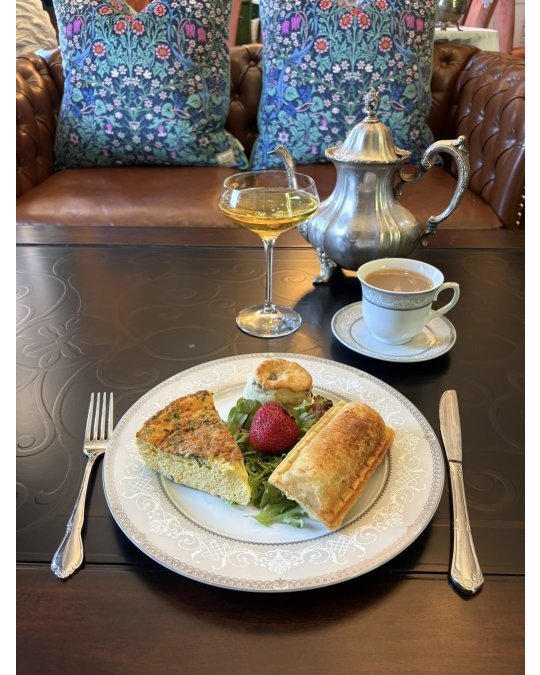
Reading about loose leaf tea is a good start, but tasting it in person is better. Our Afternoon Tea service gives you a relaxed way to enjoy tea in one sitting. For families, our Princess and Me Royal Tea events offer a special way to experience tea together, and we also host Special Events for celebrations of all kinds. Ready to visit? Book online and reserve your seat. You can also call 530-305-4152 to reserve your spots.
Frequently Asked Questions
What is the best tea to start with for a beginner?
Black tea is the most forgiving starting point. Varieties such as Earl Grey and English Breakfast tolerate higher water temperatures and longer steeping without turning overly bitter, so small brewing mistakes are less noticeable. Once you know how you like your cup, you can move on to green, white or oolong teas, which reward more careful temperature control.
How do you brew loose leaf tea without an infuser?
Place the leaves directly in the teapot or cup, pour water over them, and let them steep for the recommended time. Once the tea is ready, pour it through a small strainer or hold back the leaves with your hand or a spoon while pouring. A fine mesh strainer also works well for serving. Use roughly one teaspoon of leaves per 8-ounce cup as a starting point, and adjust to taste.
Should beginners start with black tea, green tea, or herbal tea?
Black tea is usually the easiest, followed by oolong and then green tea, which is more sensitive to water that is too hot. Herbal infusions are naturally caffeine-free and very forgiving, though they are not technically true tea. If you want a gentle, low-stakes first cup, try a black tea blend. If you prefer lighter flavors and drink tea for its freshness, a green or jasmine green tea is a good second choice.
What is the healthiest loose leaf tea to drink?
The health effects of any tea depend on how much you drink, how it is brewed and your own sensitivity to caffeine. Talk with your doctor if you have caffeine sensitivity or a health condition.

Comments