


Traditional English Tea Party Menu Ideas
Table of Contents
Understanding Afternoon Tea vs. High Tea
Afternoon Tea: The Light, Social Meal
High Tea: The Hearty Evening Meal
Which Dishes Are Historically Traditional
Course Order and the Tiered Stand
English Afternoon Tea Sandwiches and Savory Bites
Cucumber and Cream Cheese
Smoked Salmon and Dill
Egg and Cress
Afternoon Tea Scones and Toppings
What Makes a Traditional Scone
Clotted Cream vs. Whipped Cream
Jam and Preserves Selection
Topping Quantities and Scaling
Presentation on the Stand
English Tea Party Desserts and Sweet Treats
Victoria Sponge Cake
Petit Fours and Mini Eclairs
Fruit Tarts and Lemon Cakes
What to Serve at a Tea Party: Portion Sizes and Quantities
Tea Selection and Food Pairings
Earl Grey and Black Tea Classics
Seasonal Tea Pairings
Dietary Substitutions and Allergen-Aware Menus
Preparation Timeline and Make-Ahead Strategy
Frequently Asked Questions
Last Updated: October 18, 2026
Understanding Afternoon Tea vs. High Tea
Most articles treat "afternoon tea" and "high tea" as synonyms. They are not, and the difference tells you which dishes belong on the table before you plan an english tea party menu.
Afternoon Tea: The Light, Social Meal
Afternoon tea is a light meal served roughly between 2 and 5 p.m., a nineteenth-century social ritual built around three courses: finger sandwiches, scones with cream and jam, and small pastries. The food is delicate, eaten with the fingers or a small fork, and tea is the anchor, not an afterthought.
High Tea: The Hearty Evening Meal
High tea was a working-class supper served around 5 to 7 p.m., and it was substantial: hot dishes, meat pies, potatoes, bread and butter, cheese, and strong tea. The name comes from the height of the table, not from elegance. If your menu includes hot savory entrées and a full plate, you are serving high tea.
Which Dishes Are Historically Traditional
A useful rule for hosts: the traditional english tea party menu is narrow and specific. The historically traditional components are:
Finger sandwiches on soft white or brown bread, crusts removed, cut small: cucumber, egg and cress, smoked salmon, and thinly sliced ham or roast beef.
Scones served warm with clotted cream and jam.
Small cakes and pastries: Victoria sponge, fruit tarts, petit fours, and tea loaves such as banana or seed cake.
Loose-leaf black tea, typically a blend such as English Breakfast or Earl Grey.
Modern additions, mini quiches, savory tartlets, macarons, cake pops, prosecco service, themed dessert bars, are fine as extras, but labeling them traditional misleads guests who came for the classic experience.
Key Takeaway If you want a genuinely traditional menu, keep the three-course structure intact: sandwiches, then scones, then sweets. Add modern items only as extras, and say so on the menu.
Course Order and the Tiered Stand
The service order is functional: sandwiches first because they are savory and light, scones next because they are warm and rich, sweets last because they are the sweetest.
The classic three-tier stand reflects this order: sandwiches on the bottom, scones in the middle, pastries on top, served from the bottom up.
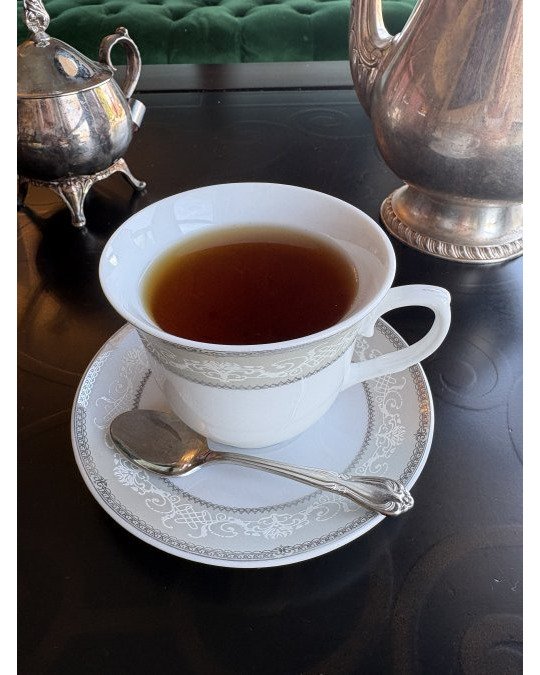
A few etiquette points: stir gently without clinking the spoon, rest the spoon on the saucer rather than leaving it in the cup, and hold the cup by the handle.
English Afternoon Tea Sandwiches and Savory Bites
Finger sandwiches are the foundation of any English afternoon tea: small, refined, eaten in two or three bites, made on soft white or wheat bread with crusts removed and cut into triangles or rectangles.

Cucumber and Cream Cheese
The cucumber sandwich is iconic: thinly sliced cucumber, cream cheese or butter, and fresh white bread, with optional dill or lemon zest. Keep the filling minimal so the cucumber shines. Prepare close to serving time, cucumbers release moisture that makes bread soggy, so slice thin, pat dry, and spread just before assembly.
Smoked Salmon and Dill
Smoked salmon sandwiches bring richness: good-quality smoked salmon, a thin layer of cream cheese, fresh dill, a squeeze of lemon, and optional capers. Prep the components ahead and assemble just before serving, since the lemon softens the bread if it sits.
Egg and Cress
Egg and cress is a British classic: hard-boiled eggs chopped fine, mixed with mayonnaise and fresh watercress or arugula, seasoned, and spread on soft bread. The filling can be made several hours ahead and refrigerated; assemble within an hour of serving.
Afternoon Tea Scones and Toppings
Scones are the heart of afternoon tea, and where most home hosts lose the traditional feel. A proper scone is tender, lightly sweet, and served warm; get the bake and toppings right and the rest of the menu can be simpler.
What Makes a Traditional Scone
The traditional shape is round, about 2 inches across, and the dough is short and buttery rather than cake-like. The key mechanics:
Keep everything cold. Cold butter and milk produce a tender crumb; cut the butter into the flour until it resembles coarse crumbs.
Do not overwork the dough. Overmixing develops gluten and produces tough scones.
Pat, do not roll. Pat to about 3/4 inch thick and cut straight down with a floured cutter; twisting seals the edges and prevents an even rise.
Bake hot and short. Scones are best eaten the day they are baked.
Experienced bakers make the dough ahead, cut the scones, and freeze them unbaked on a tray, baking from frozen with a few extra minutes. This is the best make-ahead move for a tea party, warm scones without last-minute scrambling.
Clotted Cream vs. Whipped Cream
Clotted cream is the authentic choice: thick, rich, slightly grainy, and slow to melt on a warm scone. In the United States it is sold in specialty grocers and online, and it is worth seeking out. Whipped cream works in a pinch but collapses on a warm scone; if clotted cream is unavailable, whip heavy cream with a little mascarpone to stabilize it. Split the warm scone, add cream first, then jam, some regions reverse the order, and either is acceptable. What matters is that both are present and generous.
Jam and Preserves Selection
Strawberry jam is the most common choice, but raspberry, blackberry, and apricot all pair beautifully. Offer two or three varieties. Homemade tastes superior, but quality store-bought preserves work well, look for visible fruit and minimal added pectin, and avoid overly sweet varieties, since the cream provides richness and the jam should be bright and slightly tart. Warm the jam slightly before serving and put a small spoon in each jar.
Topping Quantities and Scaling
Topping quantities are where hosts most often run short. Per person: 1 to 2 scones (2 if scones are the main event), about 2 to 3 tablespoons of clotted cream, and about 1.5 to 2 tablespoons of jam. For 6, that means 8 to 12 scones, about 1 cup of clotted cream, and about 3/4 cup of jam; double for 12. Put out small dishes with a spoon in each rather than one large communal jar.
Pro Tip Warm the scones briefly in a low oven just before serving, and set out the cream and jam at the same time. Cold toppings on a cold scone is the most common way the scone course falls flat.
Presentation on the Stand
Scones sit on the middle tier, arranged in a single layer, with the cream and jam dishes beside the stand rather than on it, each with its own spoon, and labeled if you serve more than one jam. This is also the moment to reset the table: clear the sandwich plates, replenish the tea, and bring out the scones while still warm.
English Tea Party Desserts and Sweet Treats
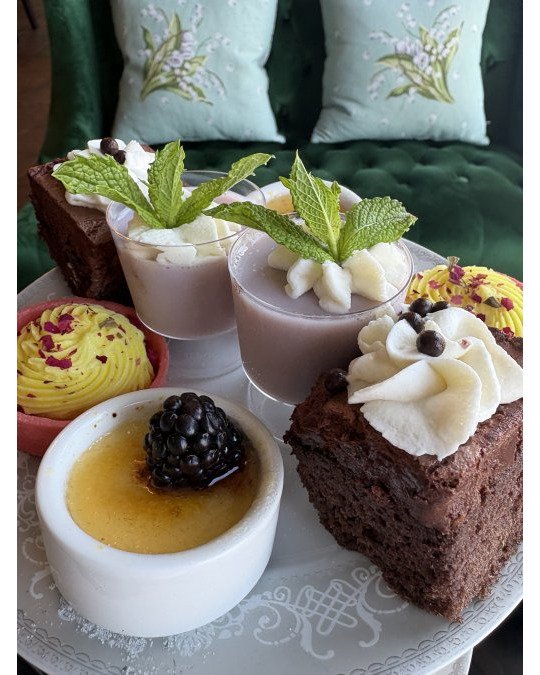
After scones, desserts complete the experience. These should be small, petit fours, mini cakes, and tarts. The goal is variety and elegance, not quantity.
Victoria Sponge Cake
Victoria sponge is a beloved British cake: two light sponge layers with jam and whipped cream in the middle, dusted with powdered sugar. For afternoon tea, serve it sliced into small squares or fingers. Bake it a day ahead and assemble a few hours before serving, with a generous but not overflowing filling.
Petit Fours and Mini Eclairs
Petit fours are small, decorative cakes with fondant icing, visually striking and eaten without a utensil. Mini eclairs filled with pastry cream and topped with chocolate are equally elegant. Both can be purchased from a bakery if you're short on time; the visual appeal matters as much as the taste.
Fruit Tarts and Lemon Cakes
Individual fruit tarts with pastry cream and fresh berries bring brightness to the sweet course, while lemon cakes add tartness and balance richness. Make them a day ahead and store airtight at room temperature; add fresh fruit to tarts just before serving so they don't weep.
What to Serve at a Tea Party: Portion Sizes and Quantities
Portion planning prevents waste and ensures satisfaction. Per person, plan for 3-4 finger sandwiches (mixed varieties), 1-2 scones with toppings, and 2-3 small desserts. For 6 people that means 18-24 sandwiches, 8-12 scones, and 12-18 desserts; for 12, double those figures. It's better to have a bit extra than to run short. Arrange everything on tiered trays, sandwiches on the bottom, scones in the middle, desserts on top, because the presentation signals care and refinement.
Component | Quantity per Person | Total for 6 | Total for 12 |
Finger Sandwiches | 3-4 | 18-24 | 36-48 |
Scones | 1-2 | 8-12 | 16-24 |
Small Desserts | 2-3 | 12-18 | 24-36 |
Tea Selection and Food Pairings
The right tea elevates the entire experience. Choose quality loose-leaf tea and brew it properly.
Earl Grey and Black Tea Classics
Earl Grey is the quintessential afternoon tea choice: black tea infused with bergamot, whose floral notes pair well with savory and sweet foods. Brew 3-5 minutes at 200-212°F. English Breakfast is a strong, full-bodied blend that stands up to rich foods like smoked salmon and cream. Both are forgiving if you slightly over-brew them, which matters when timing multiple cups.
Seasonal Tea Pairings
In spring and summer, lighter teas like Darjeeling or white tea complement cucumber and herb-forward sandwiches; brew 2-3 minutes at lower temperatures. In fall and winter, Assam or chai pair with richer fillings and warm scones, benefiting from hotter water and longer steeping.
At Sotherton Tea Room, we curate our signature tea blends to complement our afternoon tea menu. Each blend is selected for how it enhances the entire experience, from the first sip to the final bite of dessert.
Dietary Substitutions and Allergen-Aware Menus
Modern afternoon tea accommodates dietary needs without sacrificing elegance. Gluten-free: use quality gluten-free bread and flour, and label clearly. Dairy-free: coconut or cashew cream replaces clotted cream, dairy-free butter works for spreads, and plant-based milk and butter work reliably in scones. Vegan: use vegan butter, plant-based cream, and egg-free mayonnaise; desserts can use vegan chocolate and coconut cream. Nut allergies: separate nut-containing items with dedicated utensils and trays to avoid cross-contamination. Ask guests about dietary needs when they book so you can plan properly.
Preparation Timeline and Make-Ahead Strategy
Planning a traditional English afternoon tea party menu takes thoughtfulness, but the reward is an experience guests remember. The structure, sandwiches, scones, desserts, creates a natural rhythm, and the tea ties everything together.
If you'd like to experience a professionally executed English tea party or host a private event with us, we'd be delighted to help.
CALL 530-305-4152 TO RESERVE YOUR SPOTS
Frequently Asked Questions
What food is traditionally served at an English tea party?
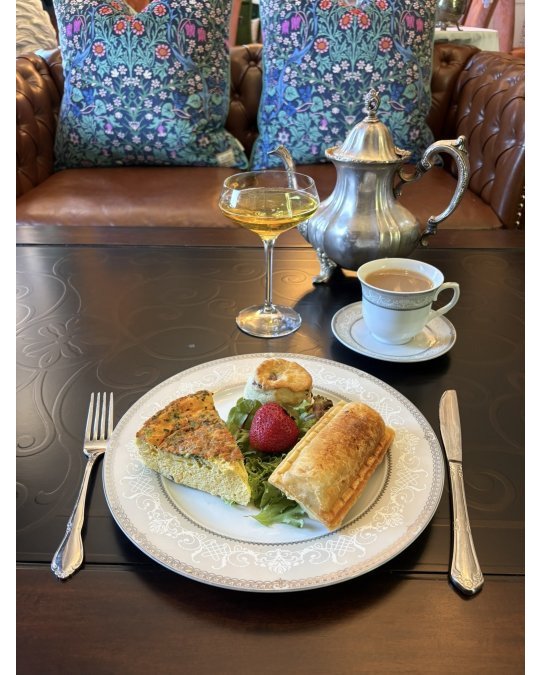
A traditional English afternoon tea features three tiers: finger sandwiches on the bottom (cucumber and cream cheese, smoked salmon, egg and cress), scones with clotted cream and jam in the middle, and petit fours, Victoria sponge, and fruit tarts on top. Savory bites like mini quiches and salmon wraps round out the menu. The progression moves from savory to sweet, allowing flavors to build throughout the experience.
How many sandwiches and scones should you serve per guest at a traditional English tea party?
Plan for 3-4 finger sandwiches, 2 scones, and 2-3 small cakes or pastries per person. Finger sandwiches should be cut into quarters or halves for easy handling. If your tea party lasts longer than two hours or includes afternoon tea as a full meal replacement, increase portions slightly. Adjust quantities based on whether you're serving additional savory bites or mini quiches alongside the traditional menu.
What is the difference between afternoon tea and high tea?
Afternoon tea is a lighter, mid-afternoon social event featuring finger sandwiches, scones, and pastries served with tea. High tea is a more substantial early-evening meal that includes hot dishes, bread, and cooked proteins, traditionally served after work. Afternoon tea emphasizes elegance and portion control; high tea is heartier and more casual. Most modern tea party menus follow the afternoon tea format.
What tea goes best with afternoon tea food?
Earl Grey and other black teas pair beautifully with the full range of afternoon tea foods, the tannins complement both savory sandwiches and sweet pastries. Lighter options like Darjeeling work well with delicate finger sandwiches and fruit tarts. Herbal and chai blends offer caffeine-free alternatives. Choose teas that won't overpower the subtle flavors of cucumber, smoked salmon, and cream-based fillings.
Visit our website
Comments